
Overview
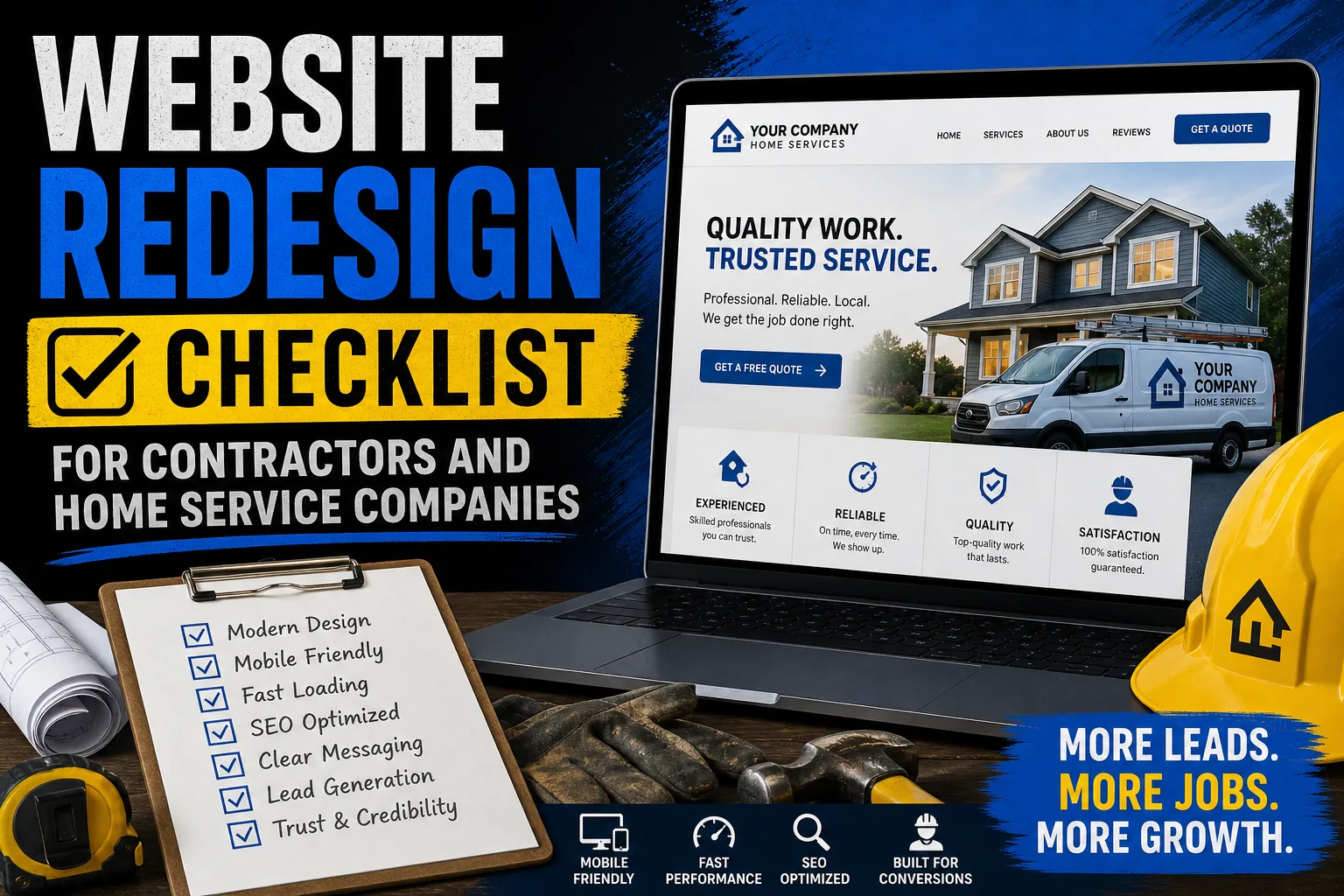
This checklist was built from the Website Evaluation Reports SDL has produced for roofing companies, plumbers, HVAC contractors, security installers, landscapers, and home service businesses across Texas and beyond. It's what we look for. It's what your new site should deliver.
Use it before you sign anything. Use it after launch to hold your developer accountable.
Phase 1: Strategy and Foundation
- Service area is defined and documented — not just "greater Houston area" but specific cities and zip codes that drive your revenue
- Primary service categories are defined by what customers search for, not what you call them internally
- Competitor analysis has been run — you know what the top 3 sites in your market look like and where they rank
- A single primary conversion goal has been identified for each page type
- Google Business Profile is claimed, verified, and consistent with the site's NAP data before launch
Phase 2: Design and Copywriting
- Phone number is in the top-right corner of the desktop header and above the fold on mobile
- Homepage headline speaks to the customer's problem or outcome, not the company's history
- Every service page has its own URL, its own H1, and its own meta description
- Real photos of your team and your work are present on the homepage and at least one service page
- Reviews or testimonials appear above the fold on the homepage without requiring scrolling on desktop
- Credentials, certifications, licenses, and years in business are visible — not buried in a footer
- The contact form requires only the fields you actually need: name, phone, service type, and message
Phase 3: Technical Build
- The site scores 90+ on Google PageSpeed Insights for mobile on launch day
- Core Web Vitals pass thresholds: LCP under 2.5s, CLS under 0.1, INP under 200ms
- LocalBusiness schema markup is present and validates in Google's Rich Results Test
- HTTPS is configured with a valid SSL certificate and all HTTP requests redirect to HTTPS
- Canonical tags are in place on all pages to prevent duplicate content penalties
- An XML sitemap has been generated and submitted to Google Search Console
- robots.txt permits crawling of all pages that should be indexed
- Image files are WebP or AVIF format, optimized for web, and include descriptive alt text
Phase 4: Conversion and Tracking
- Google Analytics 4 is installed with conversion events configured for form submissions and click-to-call
- Call tracking is set up so you know which traffic sources are driving phone calls
- Form submissions trigger a thank-you page (not just a pop-up) so conversions can be tracked
- Google Search Console is connected and the site has been submitted for indexing
- A Google Business Profile review link is embedded in the thank-you page or post-service email
Phase 5: Handoff and Ownership
- You have login credentials to your own hosting account, domain registrar, and CMS
- A plugin or dependency manifest has been delivered documenting every third-party component
- You understand how to update your own service pages and team photos without hiring a developer
- A 90-day post-launch check-in is scheduled to review rankings and conversion data
"A contractor who doesn't own their own digital infrastructure is renting ground they should own."
Red Flags During the Sales Process
Twenty-five items might feel like a lot. But every one of them represents a real way a website can fail — and real revenue that walks out the door as a result. The businesses that take this list seriously before launch avoid the $300/hour emergency calls after launch.
- The developer can't explain how they'll achieve Core Web Vitals thresholds
- The proposal doesn't mention local SEO or conversion tracking
- They can't show you three comparable sites they've built that are actively ranking
- The contract grants them — not you — ownership of the domain or hosting
- They promise first-page Google rankings within 30 days