
Overview
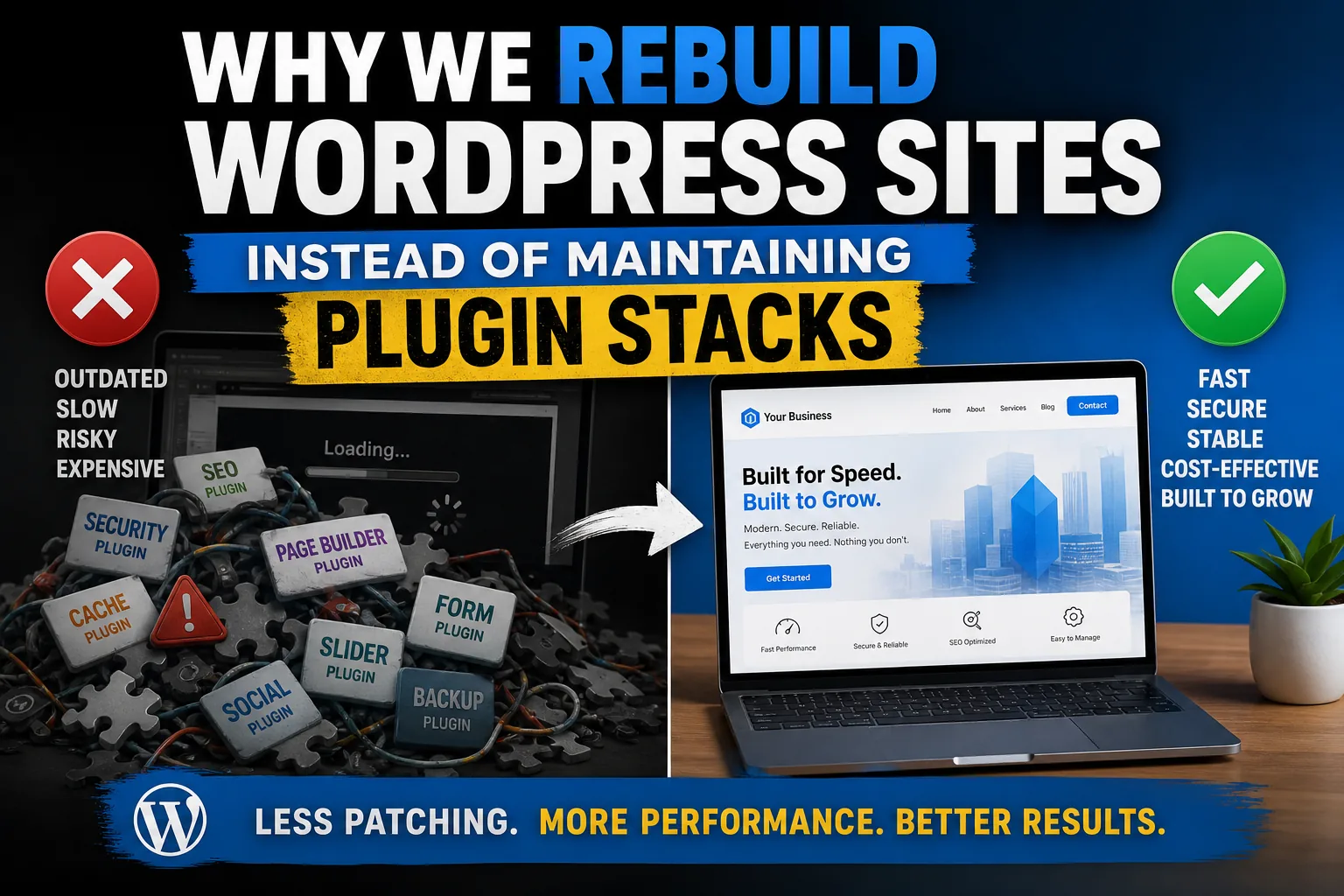
We get the call regularly: a business owner whose WordPress site just broke — again. The page builder update conflicts with the SEO plugin. The caching layer fights the form tool. The theme hasn't been touched in three years and the developer who built it is unreachable.
At SDL, we made a deliberate decision: we don't maintain legacy WordPress plugin stacks. We rebuild. Here's the honest reasoning behind that.
The Plugin Stack Problem
A typical WordPress site for a local business uses anywhere from 15 to 40 active plugins. Each plugin is a dependency. Each dependency has its own release schedule, its own compatibility matrix, and its own security exposure. When you string 30 of them together, you haven't built a website — you've built a Jenga tower.
- Plugins conflict on updates, causing partial or total site failures
- Abandoned plugins introduce security vulnerabilities that persist for years
- Page builders (Elementor, Divi, WPBakery) lock content into proprietary shortcodes that break when themes change
- Maintenance costs compound month over month with no end in sight
- Performance suffers as plugins layer JavaScript and CSS that bloats load times
"Maintaining a broken plugin stack is like changing the oil on a car with a cracked engine block. The maintenance is real, but the underlying problem doesn't go away."
Why Rebuilds Outperform Maintenance Long-Term
When SDL rebuilds a WordPress site, we start clean. We identify the minimal plugin footprint actually needed — typically under 10 plugins — and we use only actively maintained, widely supported tools. We eliminate page builders in favor of a clean block-based or custom theme structure. We enforce update policies. We test before deploying.
The result is a site that's faster, more secure, and significantly cheaper to own over a 2–3 year horizon than the same hours poured into patching what was already broken.
When We Recommend a Rebuild vs. a Platform Migration
Not every old WordPress site needs to leave WordPress. If the underlying architecture is sound, a targeted rebuild within WordPress can be the right call. We recommend platform migration when:
- The site is built entirely on a deprecated or abandoned theme ecosystem
- The client's team lacks the technical capacity to manage WordPress updates safely
- Performance requirements can't be met without a fundamental infrastructure change
- The business needs functionality that WordPress handles poorly without heavy plugin overhead
What Clients Actually Get From a Rebuild
When SDL rebuilds a site, the deliverable isn't just a new look. It's a documented, tested, security-hardened digital foundation with:
- Core Web Vitals optimized from the first deployment
- Schema markup and local SEO signals baked into the structure
- A plugin manifest documenting the purpose, version, and update policy for every active plugin
- A handoff guide so the business owner understands what they now own
That last item matters more than most clients expect. When the next developer opens that site, they should find clarity — not a mystery.
The Numbers Don't Lie
The businesses that keep patching instead of rebuilding aren't being frugal — they're deferring a larger bill. Every month of maintenance spend on a fundamentally broken foundation is a month of compound debt on the eventual rebuild they'll have no choice but to do.
The question isn't whether to rebuild. It's whether to do it now, on your terms, or later, under pressure.